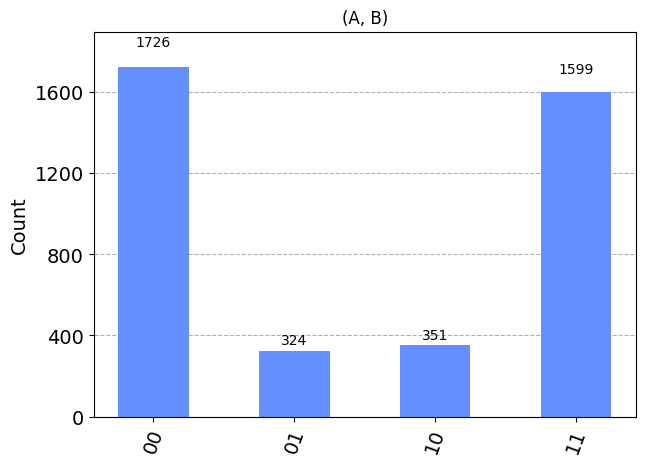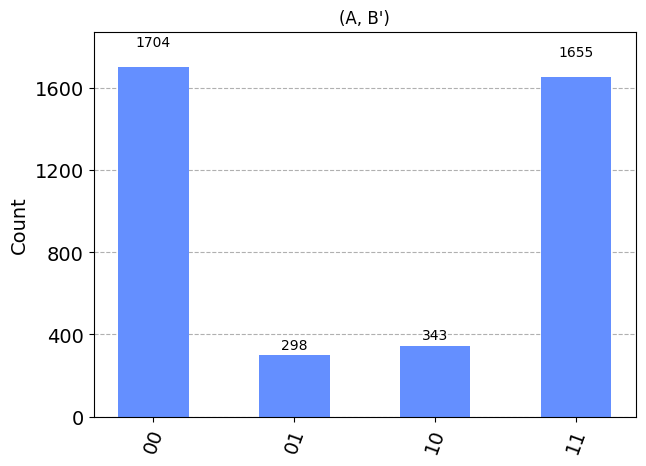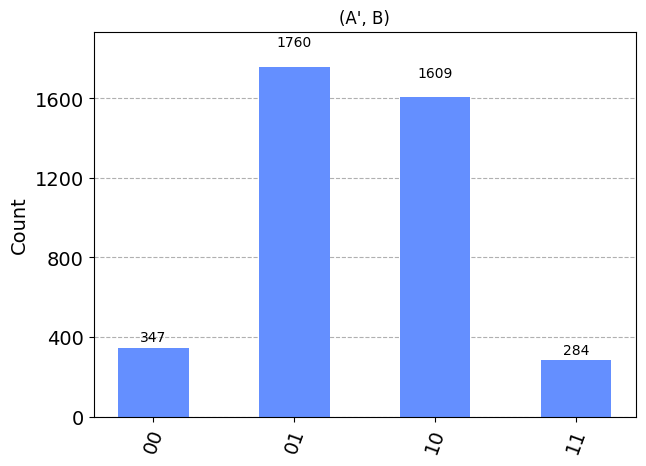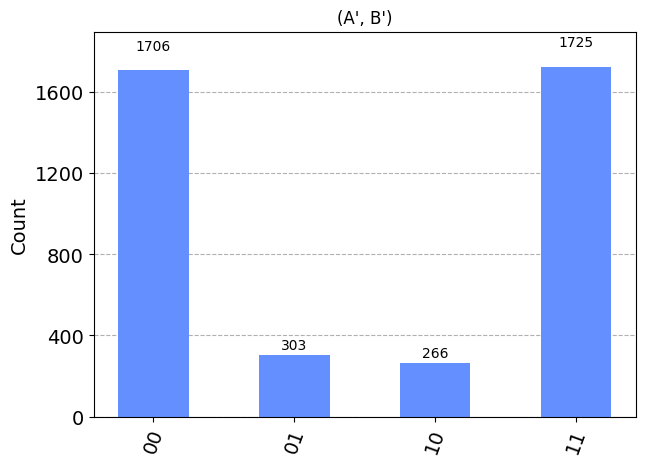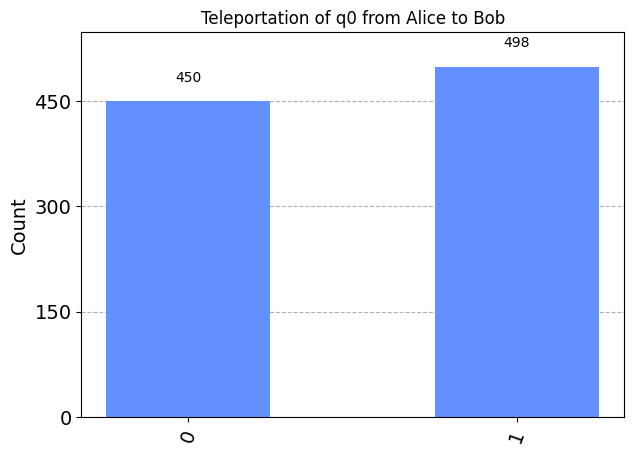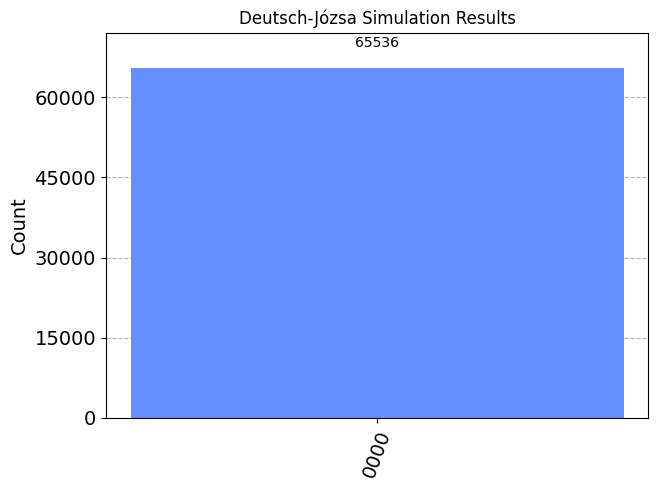
In an effort to further my knowledge in quantum computing, I enrolled in a quantum information science and technology (QIST) course in undergrad. This was after building foundational knowledge through quantum mechanics, statistical thermodynamics, and an upper-level optics course. This project served as the final exam for the QIST course, in which I prepared two qubits in an entangled Bell state and utilized them to violate the CHSH inequality and teleport a single-qubit superposition. Additionally, I deployed the Deutsch-Jozsa algorithm to assume a function on three qubits and determine whether the function was constant or balanced. To accomplish this, I generated the necessary circuitry with Python to entangle two qubits in the Phi-minus Bell state and created four additional circuits to run the Bell state through with the IBM Kyoto quantum computer. I used each output to ultimately generate an S-value greater than 2 (S = 2.7895). I generated the same Bell state again alongside an additional qubit in the "+" superposition, deploying more circuitry to teleport the superposition. Finally, I constructed a circuit incorporating a given black box and other quantum gates to execute the Deutsch-Jozsa algorithm, analyzing the process with Qiskit's Basic Simulator and executing the algorithm on Kyoto.
The CHSH inequality violation suggested that quantum entanglement's consequences cannot be explained with hidden-variable theories that satisfy the principle of locality, validating phenomena that are fundamentally quantum in nature. The teleportation protocol resulted in a nearly equal distribution of 0- and 1-states, verifying a successful teleportation of the "+" superposition. Every measurement from the Basic Simulator and nearly every measurement from Kyoto after executing the Deutsch-Jozsa algorithm was 0000, confirming that the black box assumed a constant function on the qubits.